

Most owners ask this question backward. They ask, “What profit margin is normal for a business like mine?” Then they go digging for a benchmark online, or they flat-out guess, or they copy the shop down the street that has different customers, different prices, different staff, and a different owner pulling a different paycheck.
Wrong question. Here’s the right one. “How much profit does my business need to throw off so it can actually pay for itself?”
Profit Is Not Just a Number on a Page
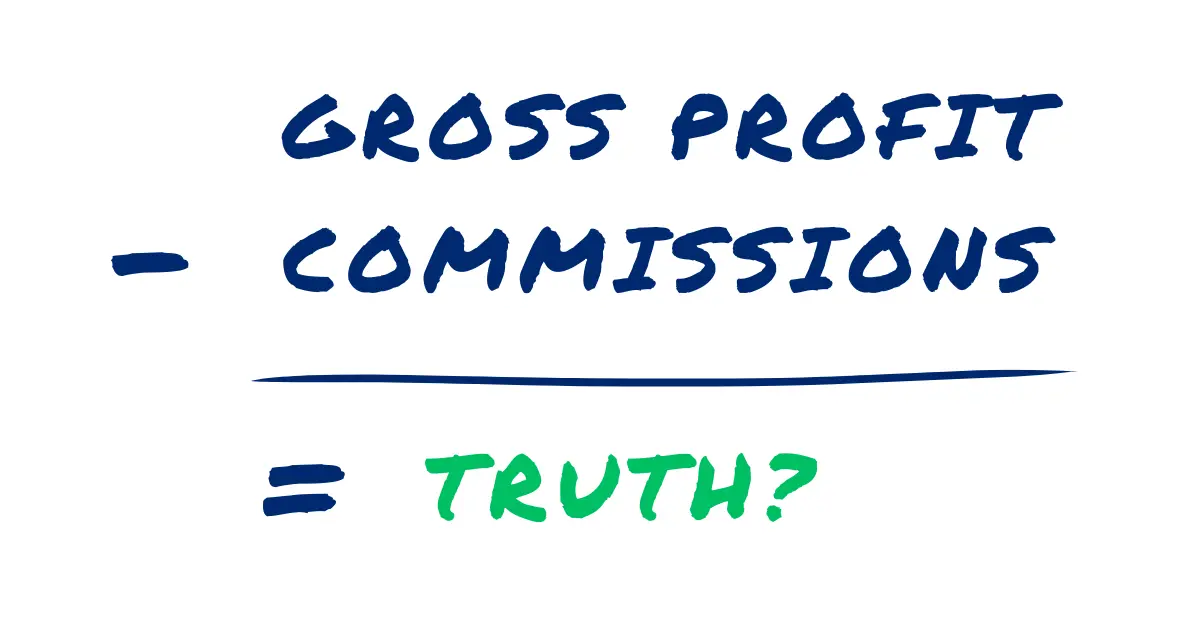
Keep it simple. Gross profit is what’s left after you cover the direct cost of serving your customers. The products, the materials, the labor hours on the job. That leftover pile still has a long line of bills waiting on it.
Out of that pile comes rent. The front desk and the manager. The marketing that brings people through the door. Your software, your taxes, your loan payments. And way at the back of the line, you’re supposed to pay yourself. Whatever survives all of that is your real profit.
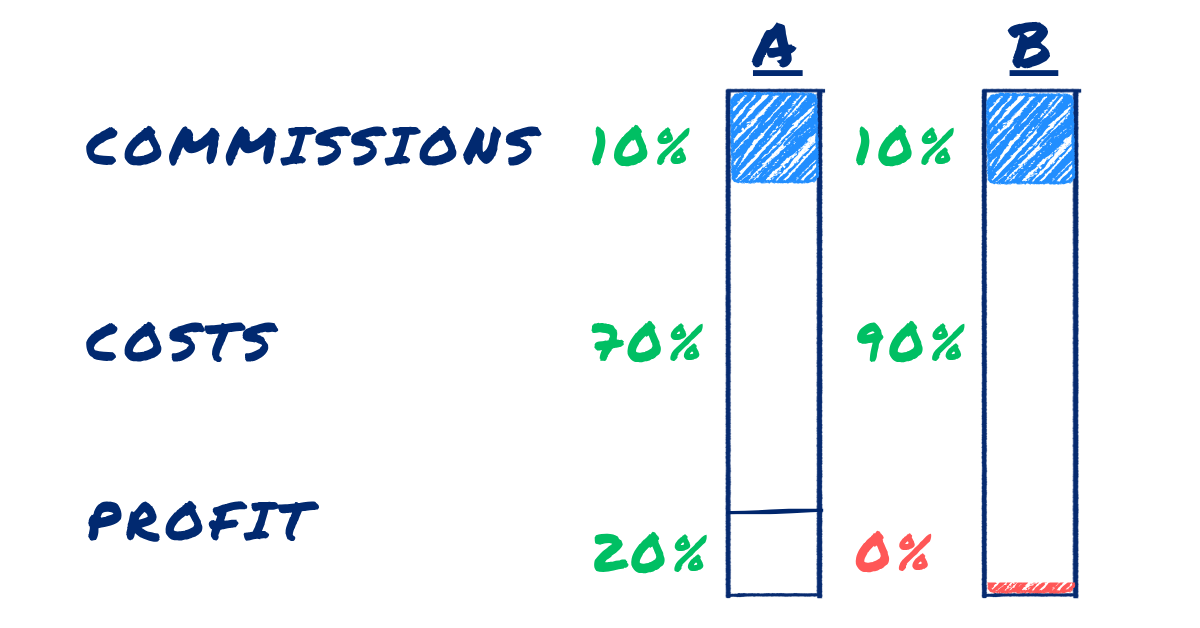
Here’s the part that fools people. You can hit a “normal” margin and still go broke doing it.
Run the numbers. Say you keep 45 cents on every dollar. Healthy, right? But if running the place properly burns 50 cents on every dollar, you’re not healthy. You’re losing a nickel on every dollar you take in and calling it a good year. So your target can’t be a number you lifted off the internet. It has to be the number your actual business needs to stay alive.
Think of It as Your Oxygen Level
Your profit target is the oxygen your business breathes. Starve it, and every decision turns into a panic move.
You put off hiring while you’re drowning. You kill the marketing. You underpay your best people and watch them walk. You cling to bad customers because an empty schedule scares you more than a draining one. And eventually you become the shock absorber for the whole operation. More hours, less pay, every hole patched with your own two hands. That’s not a business. That’s a job that happens to own you.
How to Set the Number: Work Backward
Stop guessing. Start at the finish line and walk it back.
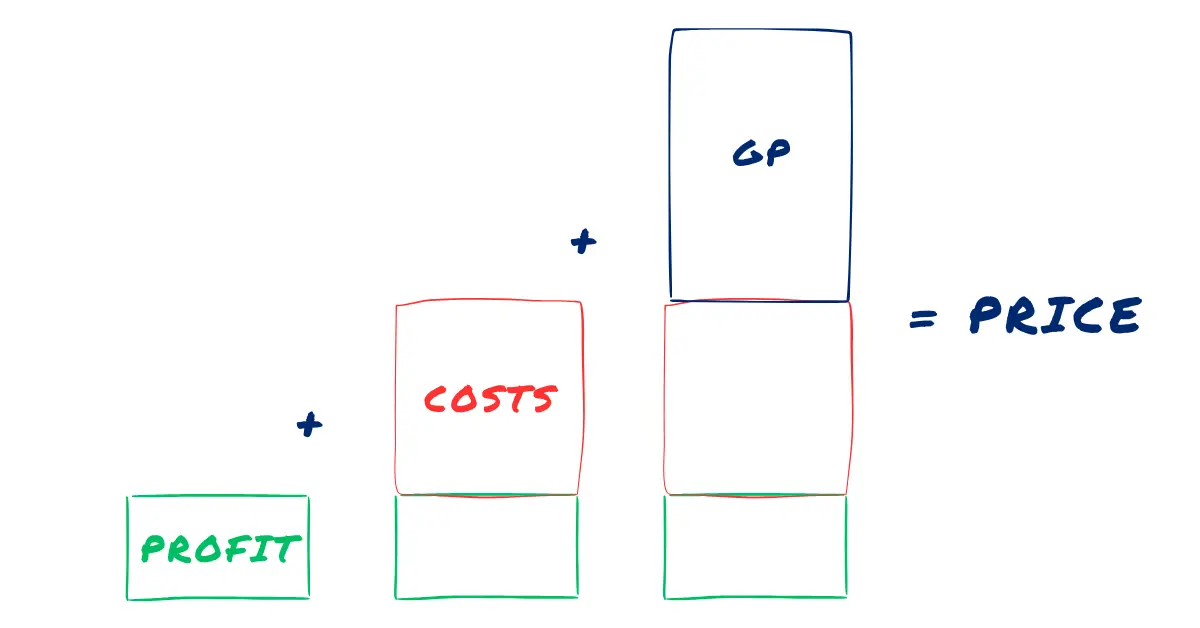
First, decide what you want the business to actually clear at the end of the year. Real profit, in your pocket, after everything.
Then add up what it costs to run the place properly. Not the bare-bones survival number. Properly.
Then add the things you keep shoving to next year. Better people. Training. The equipment that’s overdue. The marketing you’ve been too nervous to fund. Stack all three together and that total is what your profit has to cover before you’re ever allowed to call your prices “good enough.”
Watch Out for Pricing From the Bottom Up
Here’s where owners get suckered. They build a price by adding up their costs and slapping a little markup on top. Simple. Tidy. And usually wrong.
Your biggest hidden cost almost never shows up on a supplier’s invoice. It’s time. The hours your team pours into fixing mistakes, soothing complaints, redoing work, and explaining the same thing for the fifth time. That time is real money even though nobody ever billed you for it.
So your profit goal has to cover the cost of reality, not the cost of your tidy spreadsheet. Price a job at one hour when it actually eats two, and your number was fiction before the work even started.
One Business, Several Profit Goals
Here’s what most owners miss. You shouldn’t be chasing one target. You want one big company goal, with smaller goals sitting underneath it for each thing you sell.
A retail product will likely never earn what your main service earns. A big custom job can look like a trophy until you add up the planning, the headaches, and the touch-ups nobody charged for. Some of what you sell is a genuine money maker. Some of it just rounds out the menu. And some of it, if you’re honest, is a favor you’re quietly losing money on.
Your job is to set the company number high enough that the business can breathe, then make every service prove it earns its spot on the list.
Bigger Customers Are Not Always Better Customers
Same trap, different shape. A big spender is not automatically a good customer.
The one cutting you the fattest check every month may also be the one demanding constant attention, special treatment, and after-hours favors. Total up the cost of keeping them happy and the smaller, easier customer can turn out to be the one actually paying your bills. The best customer isn’t the one who spends the most. It’s the one who leaves enough behind, after the cost of serving them, to keep your doors open.
Your Profit Goal Has Four Jobs
A real profit target pays for four things. It pays to deliver what you promised. It pays to run the company. It rewards you for the risk you took putting your name on the door. And it leaves something to reinvest so you don’t fall a step behind every year.
Miss any of the four and you’ll rob one to cover another. And the one that gets robbed is almost always you. Your time, your energy, your future. That’s the bill that comes due quietly, while you’re too busy to notice.
Check the Number Often, Not Just in a Panic
Don’t wait for the bank balance to scare you into thinking about this. Build a rhythm instead. Glance at where money is leaking each week. Check which customers actually pay off each month. Review which services are pulling their weight each quarter. Reset your prices once a year, on purpose, not because you’re cornered.
The point was never to find some perfect magic number. The point is to build a profit goal that pays for the business you’re actually trying to build.