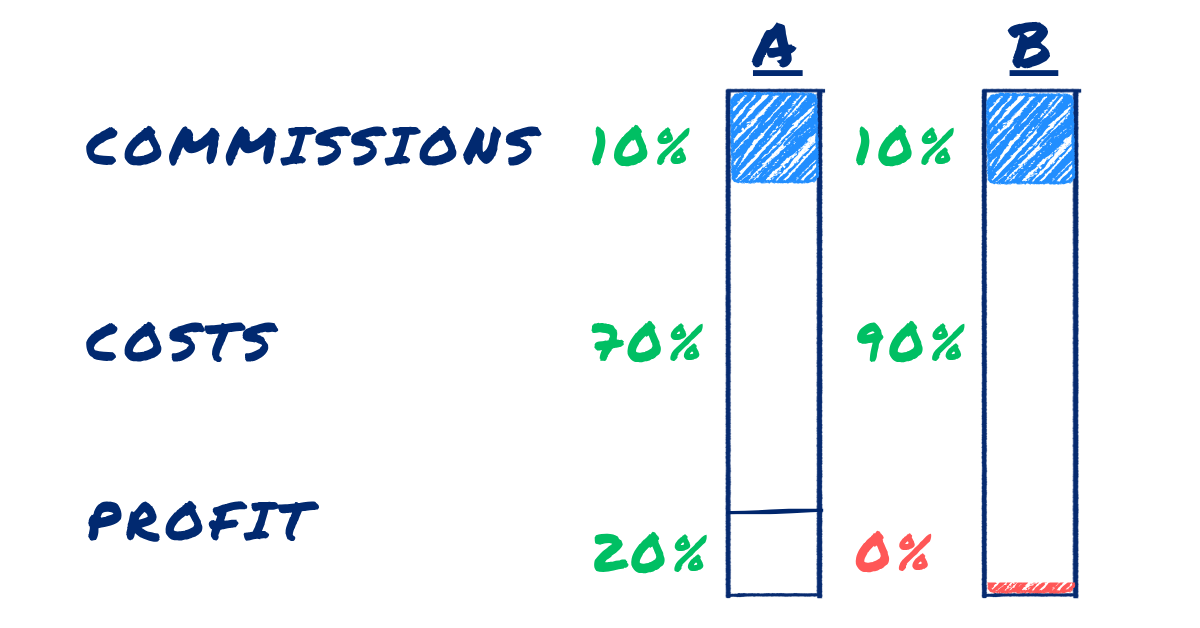


Let me guess. Sales were up last month. You felt good about it. Then you opened your bank account and couldn’t figure out where the money went.
You’re not bad at this. You’re just trusting a number that doesn’t deserve it. Almost every home-improvement owner does. The top line looks fat and healthy. The line that actually feeds your family stays stubbornly thin. There’s a reason for that, and once you see it, you can’t unsee it.
What Gross Margin Really Tells You
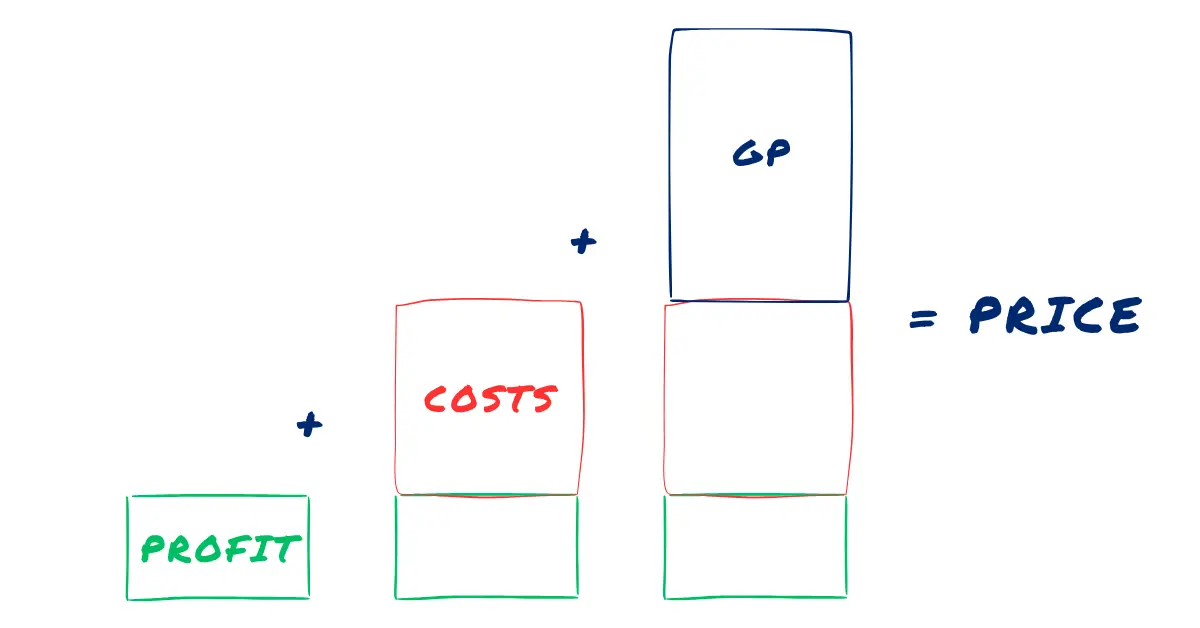
Strip away the accountant’s vocabulary and gross margin answers one question: out of every dollar a customer pays you, how much survives after you cover the direct cost of doing the work?
Run the numbers. A job brings in $10,000. Materials run $3,500. The crew costs you $3,000 in labor on that job. You’ve spent $6,500 to earn $10,000, which leaves $3,500. That’s a 35 percent gross margin. And that $3,500 is not profit. It’s the pool everything else has to drink from: your truck payments, your office rent, your insurance, your advertising, and somewhere at the very back of the line, you.
Clean number. Easy to trust. And that’s exactly the problem, because that number will lie straight to your face.
The Four Lies Hiding in Your Margin
Lie One: One Average Hides Three Different Businesses
Maybe you don’t run one business. You run several wearing the same logo. Window replacement, roofing, siding and gutters, for example. Each of these lines of business don’t earn money the exact same way. A window replacement might clear 55 percent while a roof job limps in at 35 percent.
Blend them into one company-wide average and the strong work disguises the bleeding. Your overall margin whispers “you’re winning” while one entire service line quietly drains the account every month. The average isn’t lying on purpose. You just taught it to hide the bodies.
Lie Two: The Clock Is a Cost You Never Invoice
You track materials down to the box of screws. Then you wave off the hours like they’re free. They aren’t. Labor is usually your single largest cost, and most of it never lands on a customer’s invoice.
The callback to fix a door that didn’t sit right. The two hours arguing with a supplier. The crew standing around because the wrong material showed up. The “quick favor” after the job closed. Say that’s six unbilled hours on a project at a $55 loaded labor cost. That’s $330 evaporated, and it never appears anywhere you’d think to look. Do that across a dozen jobs a month and you’ve quietly given away a paycheck.
Lie Three: Busy and Profitable Are Not the Same Word
A full calendar feels like winning. It isn’t proof of anything. A loud, demanding customer can keep three people running for a week and still pay you a margin that wouldn’t cover the gas to get there.
Here’s the math nobody wants to do. A $40,000 remodel at 15 percent margin nets you $6,000. A $12,000 job at 45 percent nets you $5,400 with a fraction of the headache, the crew time, and the risk. The big number on the contract felt like the win. The small job was the better business. Revenue is for bragging. Margin is for living.
Lie Four: Your Books Are Tidier Than Your Job Site
Your accounting software only knows what you feed it. If every job dumps into one bucket, if labor never gets matched to the work that ate it, if change orders never make it back into the cost, then your reports aren’t a measurement. They’re a bedtime story with nice round numbers.
How to Make the Number Tell the Truth
You don’t toss out gross margin. You corner it until it stops lying.
Track Margin by Job Type, Not by Company
Pull your numbers apart. Windows separate from siding separate from roofing markup. One blended figure is fine for your banker and useless for running the place. You’re hunting for the answer to one question: which kind of work pays, which kind quietly costs you, and which only looks fine because something else is carrying it.
Run the Math on the Customer, Not Just the Contract
This part stings. The customer spending $50,000 a year can be worth less than the one spending $15,000. Add up the after-hours calls, the design changes, the hand-holding, and the third trip back, and the big spender’s true margin can collapse below the easy customer’s. Spending a lot with you doesn’t make someone profitable. It just makes them present.
Put the Hours Back Into the Numbers
You don’t need a stopwatch on every worker. You need to find the jobs, customers, and promises that eat hours without paying for them. A loaded labor rate, applied honestly against real hours, turns “we were swamped” into a number you can actually price against. Glance at leaks weekly, check which customers pay off monthly, review each service line quarterly.
Fix the Habits, Not Just the Spreadsheet
Margin doesn’t get repaired once a year in a panic. It gets repaired in the small disciplines: pricing with a spine, logging the hours a job truly took, charging for change orders instead of swallowing them, walking away from the account that drains you. Points of margin are won or lost in those daily decisions, not in the year-end review.
The One Test That Cuts Through Everything
Here it is. Can you explain why your margin moved last month without guessing?
If you can’t, you’re not measuring your business. You’re watching it. Watching only tells you what already happened. Measuring tells you what to do next.
Fix the machine. Then feed it.