

If you’ve ever thought “we just need more customers” or “we need more leads,” you’re in extremely good company. It’s the most common diagnosis when a business isn’t growing the way people hope. It’s also usually the most expensive mistake you can make. Because in most businesses, the real constraint holding you back isn’t how many potential customers are showing interest. It’s what happens after they show up:
- How you explain your value.
- How you control discounting and price negotiations.
- How you structure your offers and packages.
- How you filter out opportunities that will never be profitable.
- And how you hold the line on pricing when buyers push back.
When your pricing is wrong, every other part of getting customers and serving them becomes an exhausting grind. Your marketing team has to generate massive volume to “make it up in numbers.” Your sales team has to negotiate from a weak position where they feel like they’re always apologizing for the price. Your operations team gets flooded with low-margin work that’s barely worth doing. Your leadership starts hiring more people to “handle all the demand,” and somehow profitability drops even while revenue climbs. The company feels frantically busy without feeling healthy or sustainable.
That’s why pricing isn’t really a finance topic that only accountants should care about. It’s a sales topic that determines whether growth actually turns into profit you can keep.
Here’s the uncomfortable truth that most growing businesses eventually face: what looks like a lead problem is usually a sales problem wearing a marketing disguise. And inside those sales problems, pricing is almost always sitting at the core.
The Math That Destroys Growing Companies
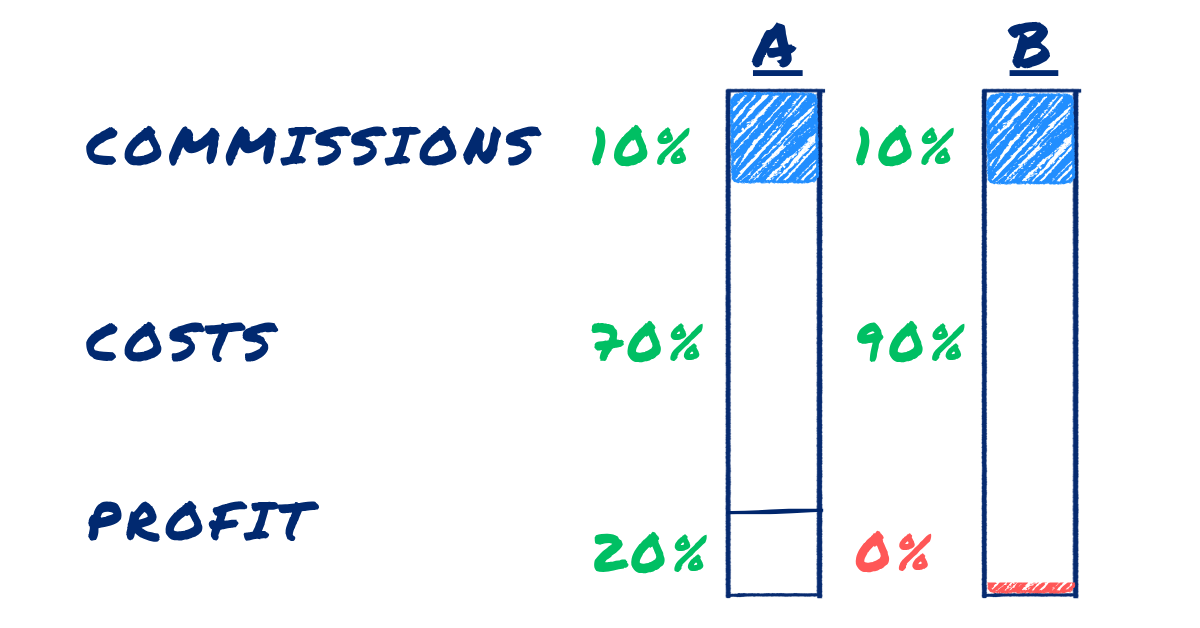
Underpricing is dangerously seductive because it creates the appearance of real traction. You’re winning deals. Your pipeline looks full. You can point to activity and revenue numbers that are climbing. But if the gross profit you’re creating from those deals doesn’t actually cover the true cost of the labor and overhead needed to deliver them, you’re just scaling a leak in your business.
One practical way to see this problem clearly is through what you might call labor economics. If your business relies on people to deliver outcomes for customers, which describes most businesses, the critical question isn’t “How much revenue did we generate?” The real question is “How much gross profit did we create for every dollar we spend on labor?”
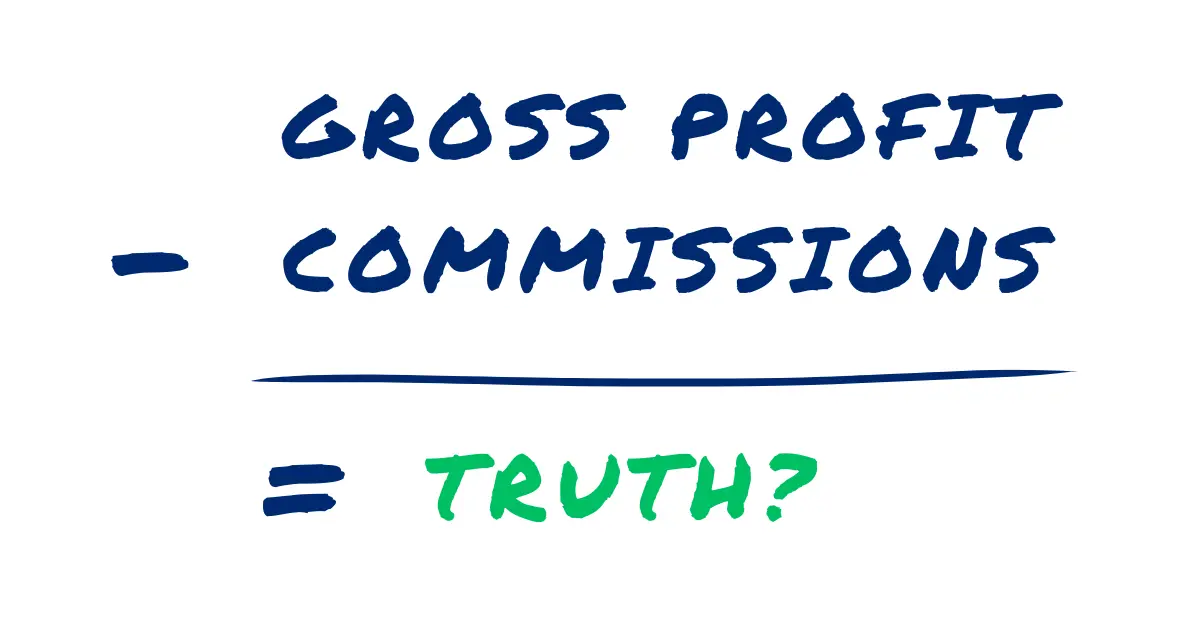
When that ratio is off, you can actually sell more and still lose ground financially. Every new deal you close drags in labor costs that arrive much faster than the profit needed to support those costs over time. A disciplined approach is using profit targets as guardrails that you refuse to compromise. If you’re not hitting a healthy baseline profit level, your first move should never be “let’s hire more people” or “let’s buy more advertising to get more leads.” Your first move should be adding gross profit, which often means raising prices, or reducing your labor costs. You resist scaling up headcount until profitability is genuinely stable. That’s not abstract theory. That’s survival logic.
This is where sales leaders often get completely blindsided by a problem they accidentally created. They think they’re solving a revenue problem by closing more deals. But they’re actually creating a capacity crisis. They close deals with low profit margins, then hire people to fulfill those deals, then profit margins shrink even further because the new hires cost more than the deals generate, then they chase even more deals to try to cover the shrinking margins. It’s a treadmill that feels like growth but functions like slow-motion business failure.
Why Most Businesses Get Pricing Wrong
Most businesses don’t deliberately create a pricing strategy. They “arrive” at whatever price they charge through accumulated habits. What they’ve always charged in the past. What the loudest competitor claims to charge. What one salesperson thinks will close a deal. Or what one difficult customer pushed them into during a tough negotiation three years ago that somehow became the standard. Then the entire organization treats that number like it’s rational and thought-through simply because it’s familiar and established.
Pricing typically goes wrong in a few common patterns.
First, you price to win deals instead of pricing to generate profit. The internal question becomes “How low can we go to close this?” instead of “What outcome are we worth, and what margin do we absolutely require to deliver it well?” That mindset forces your sales team to negotiate against themselves and against the company’s interests. Discounting becomes the default lever they pull because it’s the fastest lever they have access to.
Second, you accept customers who are genuinely bad fits as if they’re “leads” worth pursuing. They’re not leads. They’re mismatches. If a potential buyer fundamentally can’t afford your profitable price point, they’re not a lead for your business. They’re a distraction that wastes time and energy. When you treat mismatches like they’re legitimate pipeline opportunities, you create pressure on your team to chase them, customize endlessly for them, and discount heavily for them. Your pricing starts to look like the problem, but the real problem is you’re trying to sell to people who were never your customer in the first place.
Third, your offer itself is fuzzy and unclear. When potential buyers can’t clearly understand what they’re paying for and what they’re getting, price becomes the only variable they can easily compare across options. In that scenario, you didn’t actually lose on price. You lost on clarity. You accidentally made price the only obvious thing to focus on because everything else was vague.
Fourth, you confuse activity with effectiveness. A sales pipeline completely full of “interested” prospects can still be a pipeline full of people who will never actually buy, tire-kickers who are just gathering information, and deals that would kill your margins if they closed. The goal isn’t having a busy sales calendar that makes you feel productive. The goal is profitable wins that actually build your business.
The Sales Discipline That Makes Pricing Actually Work
Your pricing doesn’t hold simply because you announced it in a meeting or put it on your website. Pricing holds because your sales team executes it consistently in real conversations with real buyers.
One of the most useful mindset shifts you can make is stopping treating selling as improvisation where everyone makes it up as they go. Great selling is actually a system with specific components. Deliberate prospecting that targets the right people. Consistent qualification that filters out poor fits early. A defined way of framing and communicating value. Clear rules for if and when you’ll make concessions. When selling is a system, pricing becomes enforceable across your team. When selling is improvisation, pricing becomes optional and negotiable every single time.
This is exactly why teams often conclude the problem is lead generation. If your prospecting and qualification processes are inconsistent or nonexistent, your pipeline becomes essentially a random sample of the broader market. Most of that random sample will naturally resist your pricing. Then everyone assumes demand must be weak or that your prices are too high, when the actual reality is you simply aren’t targeting and selecting the specific buyers who value what you do and can afford it. Getting “more leads” through heavier marketing just gives you a larger random sample of the market, which actually makes the pricing problem feel even worse.
A more profitable approach is going back to sales fundamentals. Make your new business development efforts consistent and intentional rather than sporadic and reactive. Define your target customer so clearly and specifically that you’re not trying to win absolutely everyone who expresses mild interest.
In practice, this dramatically reduces pricing pressure because you’re spending your time with buyers who can actually pay your rates and who have compelling reasons to choose you beyond “you were the cheapest option.” It also forces a grown-up strategic conversation inside your company: are we building a business that delivers premium outcomes and earns premium prices, or are we building a business that competes primarily on being cheaper than alternatives?
Start With a Profit Floor, Not a Market Guess
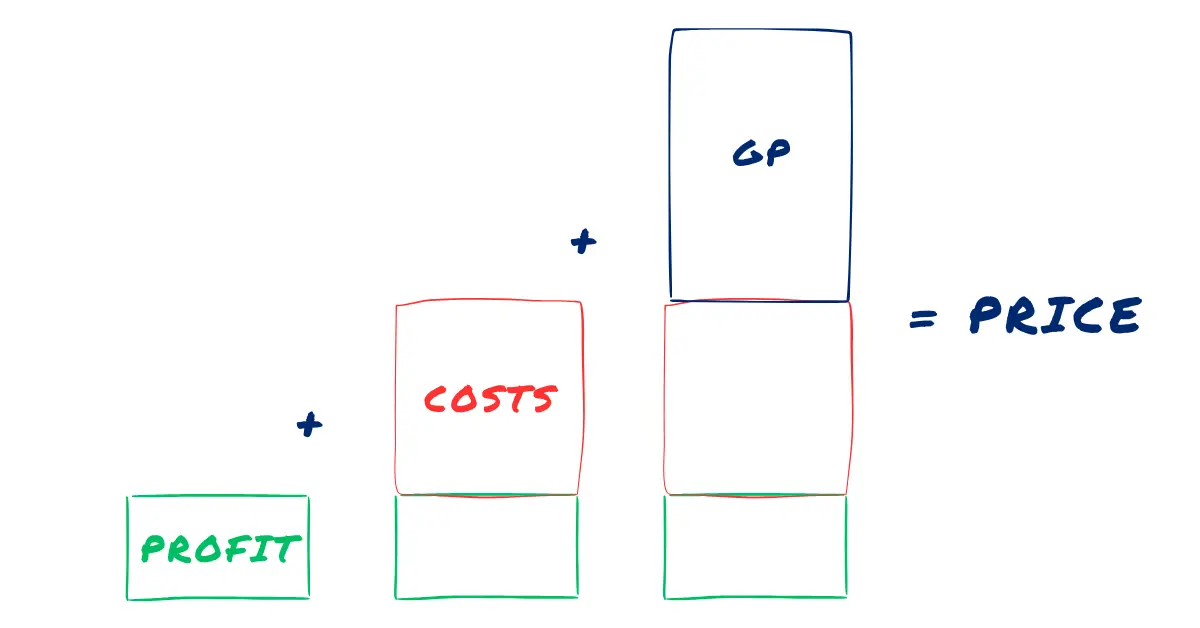
If you want pricing decisions to stop being emotional and political, you need to establish a floor. A minimum profitable price that’s anchored in the actual economics of delivering your service or product, not in guesses about what the market might accept.
That floor isn’t based on “what our competitors charge” or “what feels like a round number.” It’s based on what you must charge to produce a healthy profit after paying real market wages to your team and covering the genuine cost of labor and operations. When you establish that floor clearly, your sales team can stop inadvertently negotiating against the company’s survival. Now negotiations become a real choice with clear options: if the buyer genuinely can’t meet your floor price, you either change the scope by reducing what you deliver, or you walk away from the opportunity. That’s not arrogance or being difficult. That’s protecting the business so it can survive and serve customers well.
You also need what you might call an internal growth rule: if you’re not currently at your baseline profit target, don’t add more labor and complexity that will make reaching that target even harder. This single rule forces pricing discipline throughout the organization because it makes everyone directly confront the real constraint. You don’t have a lead generation problem. You have a gross profit problem that more leads won’t solve.
Make Your Offer Easier to Buy at Full Price
A substantial amount of pricing pain and negotiation actually comes from packaging pain. If your offer is essentially a custom creation every single time, then every price conversation becomes a negotiation about what’s fair. “Why does it cost that much?” becomes a completely reasonable question because the buyer has nothing standardized to anchor their expectations to.
Standardizing your offer doesn’t mean making it generic or boring. It means creating a clean structure that makes your value immediately visible and understandable. Think in terms of service tiers, clear scope boundaries, and optional add-ons that buyers can choose. When buyers can easily see what’s included at each level, what’s explicitly not included, and what the upgrade path looks like if they want more, the price becomes dramatically easier to accept. The price is now clearly attached to a specific set of outcomes and features instead of feeling arbitrary.
This structure also directly protects your sales team from an impossible position. If every deal requires custom configuration and pricing, each salesperson is forced to become a one-person pricing committee making up numbers. That naturally leads to discounting because the fastest way to reduce friction and close the deal is simply cutting the price. A well-structured, standardized offer replaces that friction with clarity that makes selling easier.
Turn Price Objections Into Better Conversations
When a potential buyer says “It’s too expensive,” they might actually mean four completely different things, and each one requires a different response.
They might mean they don’t understand the value you’re providing. That’s a sales messaging problem where you haven’t effectively communicated what they’re getting.
They might mean they don’t believe you can actually deliver the value you’re promising. That’s a credibility problem where you haven’t provided sufficient proof.
They might mean they genuinely can’t afford it given their current financial situation. That’s a qualification problem where this person was never a good fit for your business.
Or they might mean they’re trained to ask for discounts because it has consistently worked for them in the past with other vendors. That’s a concessions policy problem where previous sellers taught them to expect flexibility.
If you treat all four situations as the same objection and respond by immediately discounting, you’re teaching the market a clear lesson: your stated price is flexible and negotiable, and your value isn’t really worth what you initially claim. Over time, this attracts exactly the kinds of buyers who expect and demand that behavior.
Instead, you want a consistent internal standard across your sales team: when pricing pressure shows up in a conversation, your first lever is always adjusting scope and structure, never automatic discounting. You can absolutely offer meaningful tradeoffs: “If we need to reach that lower price point, we would remove these specific components of the service.” That’s not being stubborn or unreasonable. That’s maintaining integrity. It forces the buyer to decide what they actually want and need, and it prevents your company from promising outcomes it can’t profitably deliver.
Implementation Is Where Most Pricing Strategies Fail
Even if you completely rebuild your pricing and packaging from the ground up with solid logic, you still have to actually implement the changes throughout the organization. That’s where most companies fail completely. They treat pricing changes like a memo or an announcement instead of recognizing it as a significant operational shift that requires real work.
Pricing is one of those business topics where choosing truth over harmony becomes essential. Your leadership team needs reality-based dialogue and honest assessment. What prices are we actually closing deals at in practice? Where are we discounting and why? Which customer segments are genuinely profitable for us? Which deals create ongoing delivery pain for our team? Where do we cave under pressure? If you don’t surface that truth clearly, you can’t possibly correct anything. And if you don’t end meetings with real commitments about who will change what specific thing by what specific date, pricing discipline becomes an empty slogan that nobody follows.
This is also where many businesses confuse budgeting exercises with actual execution. Budgets can easily become political gaming exercises where targets get negotiated and numbers become marching orders without any clear action programs behind them. Real pricing discipline requires the opposite approach: a genuine plan that ties your strategy about who you serve and why you win to your operations about how you deliver to your sales behaviors about how you sell and what you will and won’t concede. If pricing isn’t explicitly built into your operating plan and reinforced in regular recurring reviews, it will evaporate the moment a salesperson feels pressure to close a deal.
What a Profitable Sales Process Actually Looks Like
A genuinely profitable sales model is boring in the absolute best way possible. It has clear guardrails and established routines that everyone follows.
The team defines a specific target buyer who can pay profitable prices, and prospecting becomes a consistent daily or weekly activity rather than a panic response when the pipeline suddenly looks empty. Qualification is genuinely rigorous: you don’t carry deals forward that would require heroic efforts or deep discounts just to make the sales calendar feel busy. Proposals are standardized enough to be directly comparable, with clear service tiers that explicitly attach price levels to scope and outcomes. Discounting is governed by clear rules and required tradeoffs, not by emotions or desperation. And leadership reinforces these standards through regular operating reviews where reality gets discussed candidly, specific commitments get made, and actual performance gets measured against standards.
The result feels almost unfair compared to how most businesses operate. The same amount of selling effort and activity produces substantially more profit because every single deal is fundamentally healthier from the start. You stop feeling like you desperately “need more leads” because the leads you’re already generating convert at much higher rates, at much better margins, with far fewer concessions and compromises.
Pricing Isn’t a Number, It’s Who You Are
The businesses that succeed and grow sustainably over the long term treat their pricing as a core part of their identity, not as a tactical variable to adjust whenever they feel pressure. They don’t apologize for their prices or act embarrassed. They build their entire sales story around the outcomes they deliver. They price their offerings specifically to sustain the quality they promise. And they flatly refuse to pursue growth in ways that would destroy their profitability.
They don’t outsource confidence about their value to whatever the market happens to do. They decide what they’re worth based on what they actually deliver, and they build a complete sales system that proves that value consistently.
If you’re currently feeling intense pressure to dramatically increase lead generation and get more prospects into your pipeline, pause for a moment and look at what’s happening downstream from that initial interest. Are you pricing your offerings to generate real profit? Are you actively targeting buyers who can actually afford to pay you properly? Are you discounting primarily because of competitive pressure, or because your offer and your sales process don’t make your value sufficiently obvious? Are you hiring more people to fulfill low-margin work that never should have been sold in the first place?
Because when your pricing is genuinely right, and when your sales team has the discipline and support to hold that pricing consistently, you don’t need a miracle breakthrough in lead generation to grow.
You actually need fewer deals that make substantially more money. That’s not a limitation. That’s liberation from the exhausting treadmill of constantly chasing volume while profitability slowly bleeds away.
The path to sustainable growth isn’t generating more interest from more potential customers. It’s converting the interest you already have into profitable relationships that actually build your business instead of just keeping you busy.